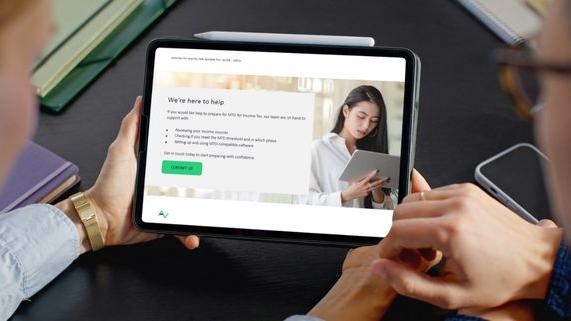
Qualifying income for MTD for Income Tax explained
Starting from April 2026, Making Tax Digital for Income Tax (MTD for Income Tax) will impact sole traders, the self-employed and landlords with qualifying income over £50,000.
Those impacted will need to keep digital records and submit quarterly updates using MTD-compatible software, marking a significant change for how sole traders, the self-employed and landlords manage their tax affairs.
With the deadline of April 2026 fast approaching, we would advise staying informed and preparing now to ensure compliance.
What is qualifying income?
A frequent area of confusion is the definition of “qualifying income.” Simply put, qualifying income includes:
- Gross income from self-employment
- Gross rental income from UK property
Importantly, these sources of income are considered in combination. It’s not enough to look at each stream in isolation.
Other income such as dividends, interest, pensions, etc. are not considered in the Qualifying Income Threshold test, but they would be accounted for in the digital tax return that will be completed in MTD compatible software.
Income vs. profit – why it matters
Another point that often leads to misunderstanding is the difference between income and profit. For the purposes of determining whether you fall within MTD’s scope:
- Income refers to your total gross earnings - before any allowable business or property expenses.
- Profit, on the other hand, is what remains after deducting those expenses.
MTD eligibility is assessed based on income, not profit. So, it’s the top-line figure - the full amount received before deductions - that matters.
Example: If you earn £25,000 from self-employment and £30,000 from rental income, your combined qualifying income is £55,000. As this exceeds the initial £50,000 threshold, you will fall within the first wave of MTD for Income Tax from April 2026.
A common area of confusion
We’ve answered some common questions below to help clarify some points, and have further FAQs at the end of this guide to help clear up other areas: