
Home

Our Strategy & Targets

Our Sustainability Strategy

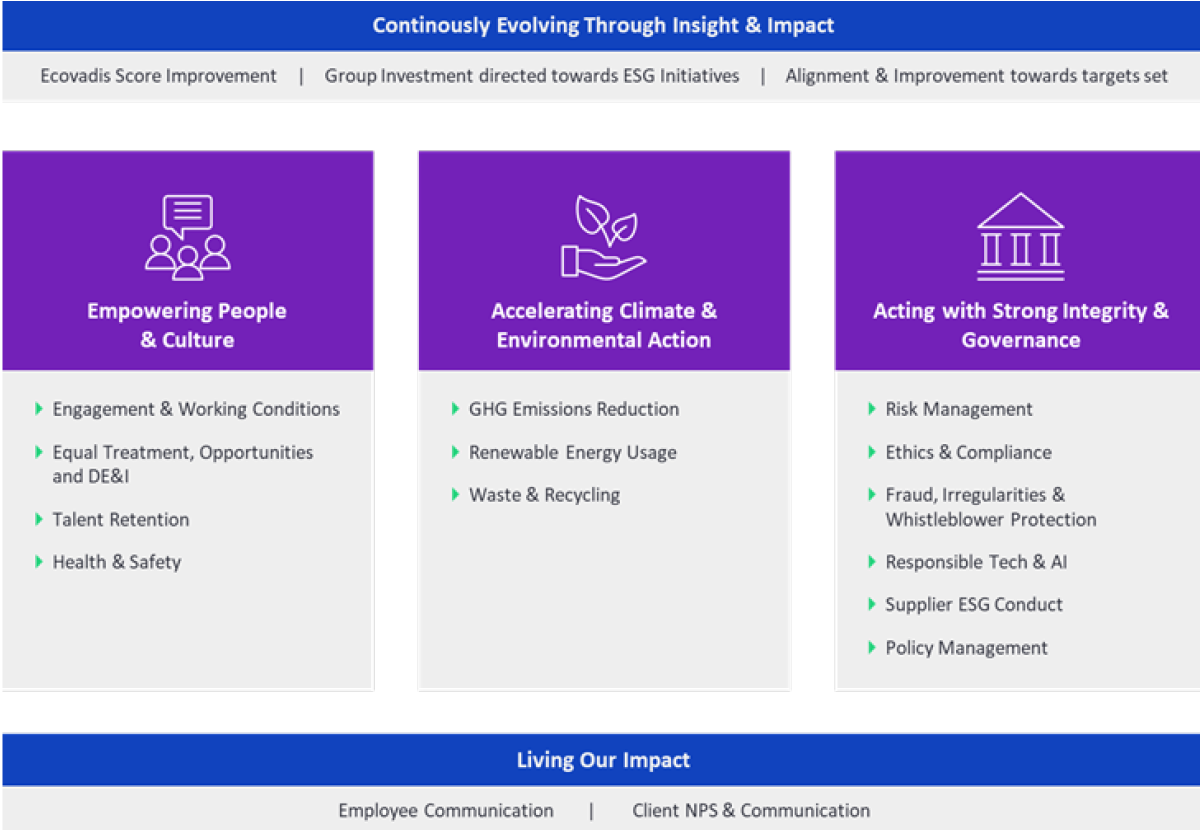
Our Sustainability Strategy is grounded in the findings of our Double Materiality Assessment, which we translated into strategic sustainability themes aligned with Azets’ business priorities and stakeholder expectations from the material topics identified.

We have defined a clear sustainability vision supported by key metrics and measures that reflect Azets’ purpose and our pathway pillars, ensuring they remain fit for purpose across the multiple jurisdictions in which we and our clients operate. The strategy outlines our core sustainability pillars (highlighted in purple), which represent the areas most material to our business. We are committed to continually driving progress against these themes, monitoring performance and always striving for improvement.

We have also ensured that these themes align with the regulatory requirements we are subject to, as well as with wider market standards we have committed to.

Finally, we remain focused on evolving through insight and impact: improving our Sustainability performance and targets over time, and communicating our progress and achievements to our broader stakeholder community, ensuring transparency and reinforcing our commitment to responsible business.
Our target setting

Following the formalisation of our Group Sustainability Strategy, it was imperative that we also set clear Group-level sustainability targets. Doing so translates our strategy into measurable priorities, strengthens accountability, and provides a clear framework for tracking progress over time. This is crucial to ensure our ambitions are not only well defined, but also actionable and embedded across the business.

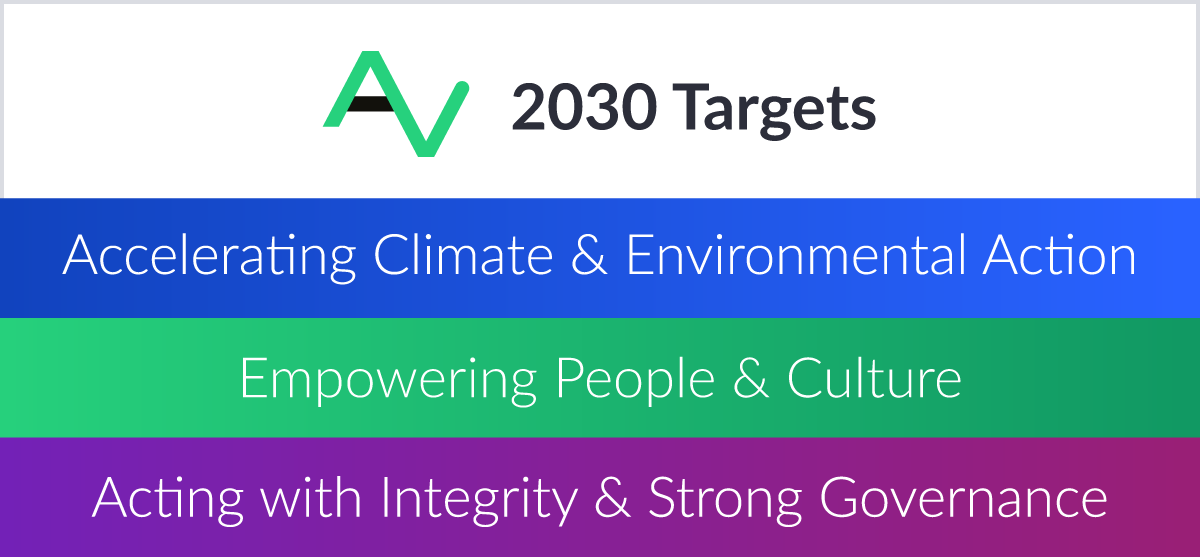
Our 2030 targets therefore represent the outcomes we intend to work towards as Azets continues to build a more sustainable, resilient and responsible business. These ambitions are also grounded in the Future-Fit Business Benchmark, helping ensure our targets focus on the ‘break-even’ fundamentals - reducing harms and building the management systems needed to operate responsibly and resiliently over the long term.

We will also review progress against our targets frequently, using this regular assurance process to track performance, drive continuous improvement, and refine or expand our target set over time as our strategy and maturity continue to evolve.

Our Sustainability Targets

Environmental (E)

Theme

Level

Target statement

Target year

GHG Emissions Reduction

Target

Set SBTi-aligned Scope 1, 2, and 3 reduction targets and be on track to achieve them

2030

GHG Emissions Reduction

Sub-target

Set SBTi-aligned reduction targets for Scope 1, 2, and 3 and obtain validation from SBTi

2028

GHG Emissions Reduction

Target

Achieve 90% renewable energy use across sites we directly control energy procurement

2030

GHG Emissions Reduction

Sub-target

Achieve 70% renewable energy use across all sites we directly control energy procurement

2028

Social (S)

Theme

Level

Target statement

Target year

Employee engagement and satisfaction

Target

Improve overall employee engagement and satisfaction by maintaining eNPS at or above the industry be

2030

Employee engagement and satisfaction

Sub-target

Increase eNPS to 31

2028

Gender balance in senior leadership

Target

Reach gender balance of 40/60 in senior leadership positions (covers J1 and J2)

2030

Gender balance in senior leadership

Sub-target

Reach gender balance of 38/62 in senior leadership positions (covers J1 and J2)

2028

Gender balance in total workforce

Target

Maintain gender balance of 50/50 in total workforce

2030

Gender balance in total workforce

Sub-target

No sub-target suggested, as the target focuses on maintaining

2028

DE&I NPS

Target

Improve overall DE&I NPS to meet or exceed the industry benchmark (between top 25–50th percentile),

2030

DE&I NPS

Sub-target

Increase DE&I NPS to 44

2028

Leadership development participation

Target

Achieve gender-balanced participation in leadership development programmes, with women representing 50:50 of participants across key leadership and career progression programmes at Group level

2030

Leadership development participation

Sub-target

Increase female participation in leadership development programmes to at least 38% overall, with a clear action plan in place to strengthen the female leadership pipeline

2028

Governance (G)

Theme

Level

Target statement

Target year

Responsible AI governance

Target

Implement a responsible AI governance framework, under which 100% of in-scope AI systems are assesse

2026

Responsible AI governance

Sub-target

100% of all implementable AI will be routed through the Responsible AI governance framework

2026

Responsible AI governance

Sub-target

100% of in-scope AI systems are assessed and monitored for ethical risks, with action plans in place to address key risks*

2027

Responsible AI governance

Sub-target

80% of our employees will be upskilled in AI, ensuring we continue to nurture our people & equip them with the right tools to succeed in the workplace

2027

Supplier decarbonisation

Target

Engage strategic suppliers to support decarbonisation in line with our SBTi-aligned ambition and pro

2030

Supplier decarbonisation

Sub-target

No sub-target suggested, as the target would relate to a specified SBTi target under the Climate pillar

2028

Supplier ESG risk screening

Target

Conduct ESG risk screening covering 100% of strategic suppliers to assess risks of significant adver

2030

Supplier ESG risk screening

Sub-target

Conduct ESG risk assessments covering 70% of strategic suppliers to assess risks of significant adverse environmental and social impacts

2028

About Azets

Our Leadership

Join our team